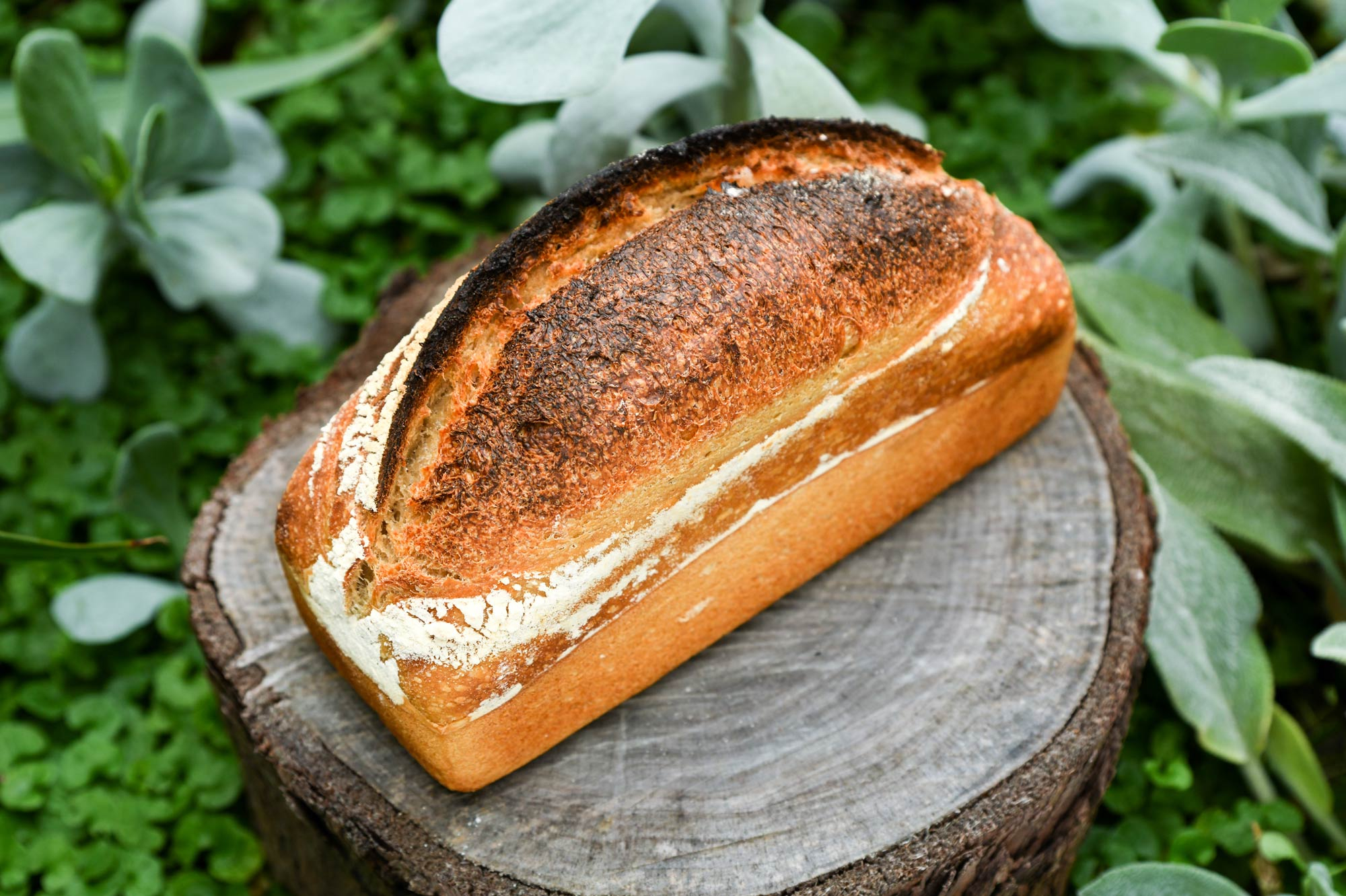
People often ask why our bread is so dark and why it costs a little more than a supermarket loaf. The short answer is time. A Wildwood loaf is mixed, rested, folded, shaped and chilled over the best part of two days before it goes anywhere near the oven.
It starts with a starter
Sourdough has no packet yeast. It rises with a starter, a simple mix of flour and water that is home to wild yeasts and friendly bacteria. We feed ours every day. When it is bubbly and smells a little like yoghurt, it is ready to raise a batch of dough.
A slow ferment does the heavy lifting
Once the dough is mixed we leave it alone for hours, giving it a gentle fold now and then. During that time the grain releases its nutrients and natural sugars. Those sugars are what caramelise in the oven and give the crust its deep colour and chew.
After shaping, the loaves spend the night in the cool room. The cold slows everything down and lets flavour build. It also makes the dough easier to score, which is how each loaf gets its ear.
Why dark is good
A pale crust is a shy crust. We bake until the loaf is a rich chestnut brown because that is where the flavour lives. If you tap the base and it sounds hollow, it is done.
What goes in
Flour, water, salt and time. We use Australian organic flour and favour local, sustainable produce wherever we can. You can read more about our suppliers on the FAQs page, or meet the loaves themselves in the store: the Organic White Heritage Sourdough and the Organic Rye and Triticale Sourdough.